
Degradation, Yield Math, and Why Inverters Fail First
Three things we've been thinking about this week. They each came up in different module selection conversations, and they each get less airtime than they should.
Degradation isn't one thing
When a deck says "low degradation," it usually means one number on a datasheet. The first-year drop, and the annual rate after that.
That number bundles three different mechanisms into a single line.
LID is the early drop you see in the first months of operation. Older PERC cells carried this risk largely because of boron-oxygen defects in the p-type substrate. N-TOPCon uses n-type silicon. The structural cause of LID is largely absent.
LeTID is a slower drop that emerges over years, accelerated by heat. Also closely tied to the boron chemistry of older cell architectures. With n-type, this category effectively drops out of the conversation.
PID is the third one. This one is not about cell technology at all. It is about encapsulant choice, edge sealing, and how the system is grounded. The cell doesn't fix it. Process discipline does, every module, every shift.
So when someone tells you N-TOPCon has lower degradation, two of the three categories are structurally smaller. The third still has to be engineered into every module that leaves the line.
That distinction matters because the third one is where modules that look identical on paper start to behave very differently in year seven.
The inverter is the weak link, not the module
Designing a project for a 30-year life means asking, out loud at the design stage, which component fails first.
In nearly every PV project on the ground today, it is the inverter. Modules are designed for decades of outdoor service. Inverters are not. They're power electronics packed into a sealed enclosure, often mounted somewhere that gets warm.
Over a 30-year project, inverters get replaced at least once. The teams that plan for it budget for it. The teams that don't end up procuring on emergency timelines, which is rarely the best price.
Three small decisions move the needle.
Heat. Inverters live longer when they live cooler. Location and ventilation are cheaper reliability than premium specs.
Service. Pick brands with real service presence in India. Spares matter. Response time matters more.
Topology. String inverters fail small. Central inverters fail big. The choice changes how a single failure event affects revenue, and it isn't only a unit price question.
None of this is about modules. But a plant that loses its inverters loses production, no matter how good the modules are.
Yield is a multiplication, not an addition
The shortcut goes like this. Rated capacity, peak sun hours, flat performance ratio, done.
That answer is usually wrong. In either direction.
Real yield is a chain. Nameplate. Temperature derate using the site's actual cell temperature profile, not the lab condition. Bifacial gain dependent on actual ground reflectivity. Soiling, mismatch, DC and AC cabling, inverter efficiency at part load, transformer losses, plant availability.
Each one is a small factor. They compound. A generic performance ratio that ignores half of them underestimates yield at one end of the year and overestimates it at the other.
The next issue will share the multiplicative yield model we use internally, broken out line by line, so the assumptions become arguable on their own terms.
From the line
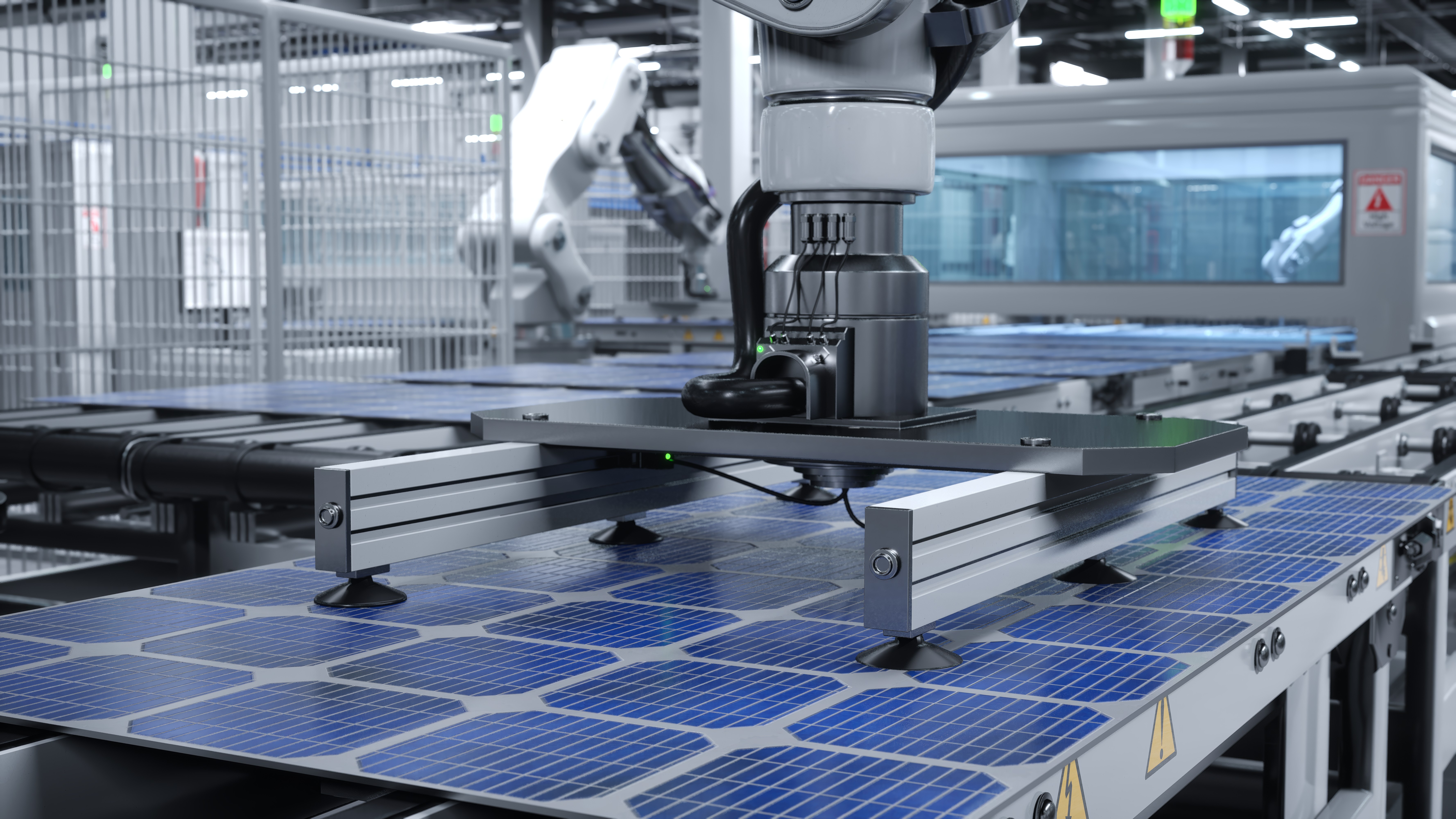
Our facility has been running its operational cycle for some time now. The most interesting data coming off the line right now is not headline production volume.
It is the variation between modules inside a single batch.
A batch with tight clustering tells you the process is in control. A batch with a wide spread, even if the average looks right, says something is drifting somewhere. We track that distribution every shift.
It is an internal metric. It is also the metric that decides whether the datasheet means what it says when the modules reach a project site.